They Were There
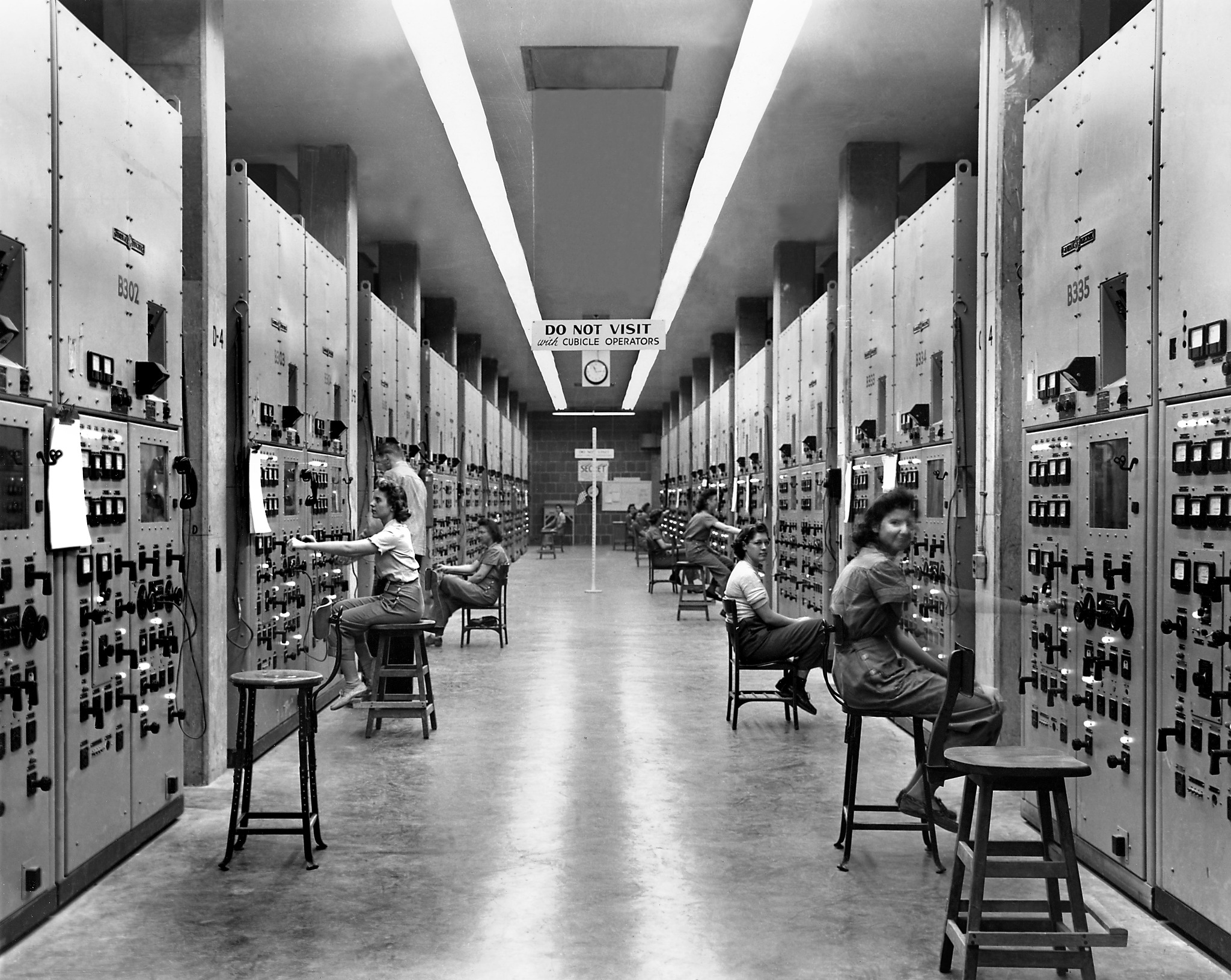
Women operating calutron controls during the Manhattan Project. Photograph: Ed Westcott. U.S. Department of Energy Oak Ridge, Y-12-141. U.S. Department of Energy source
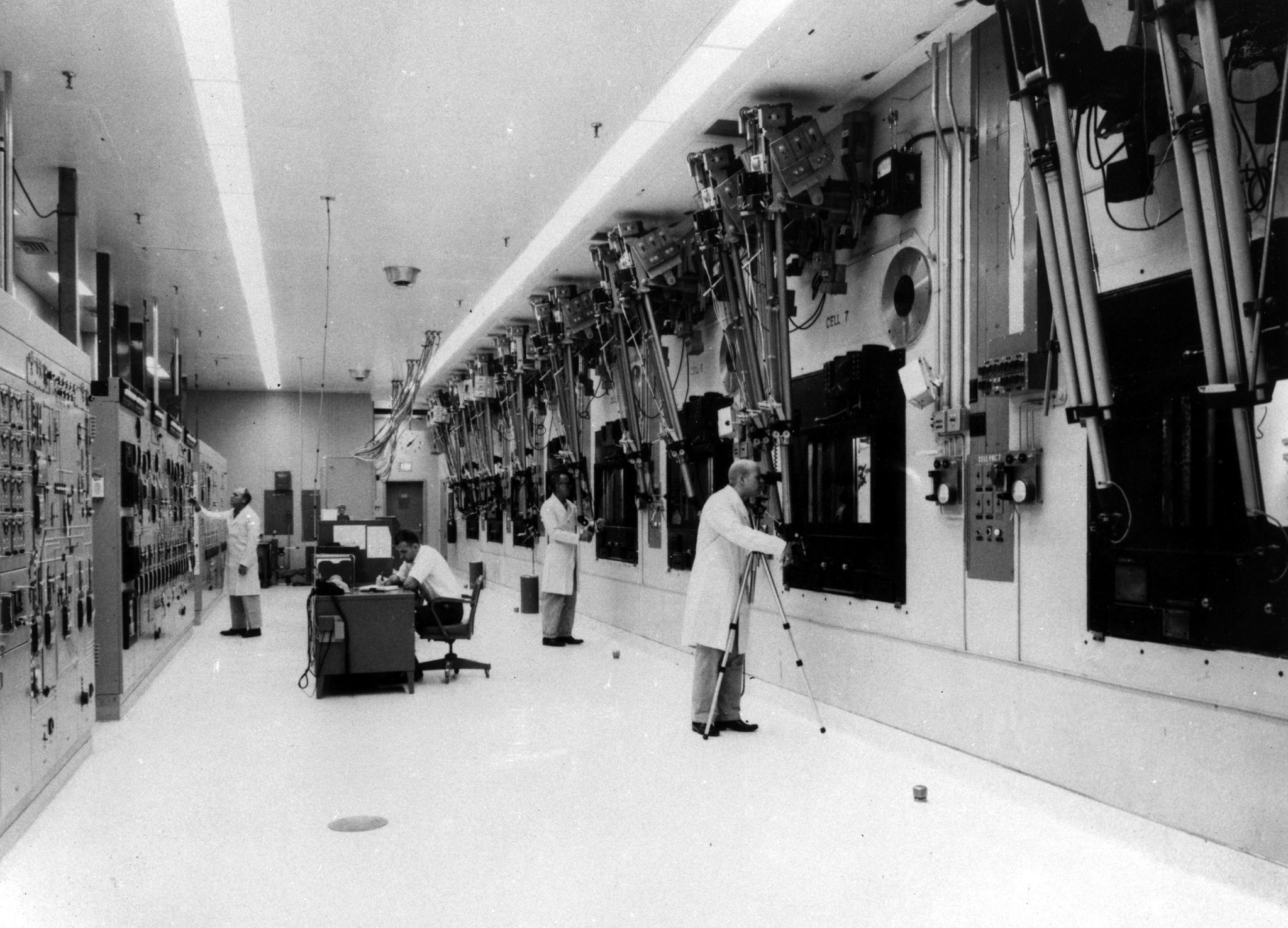
Workers in the operating area of the Trans-uranium Processing Plant. U.S. Department of Energy, HD.6B.478. U.S. Department of Energy source
Remembering America's Nuclear Workers
To those whose names we know, and those whose names history has yet to recover.
To the workers who became ill, those who died, those who survived, and the families who continue to seek answers.
You are not forgotten.
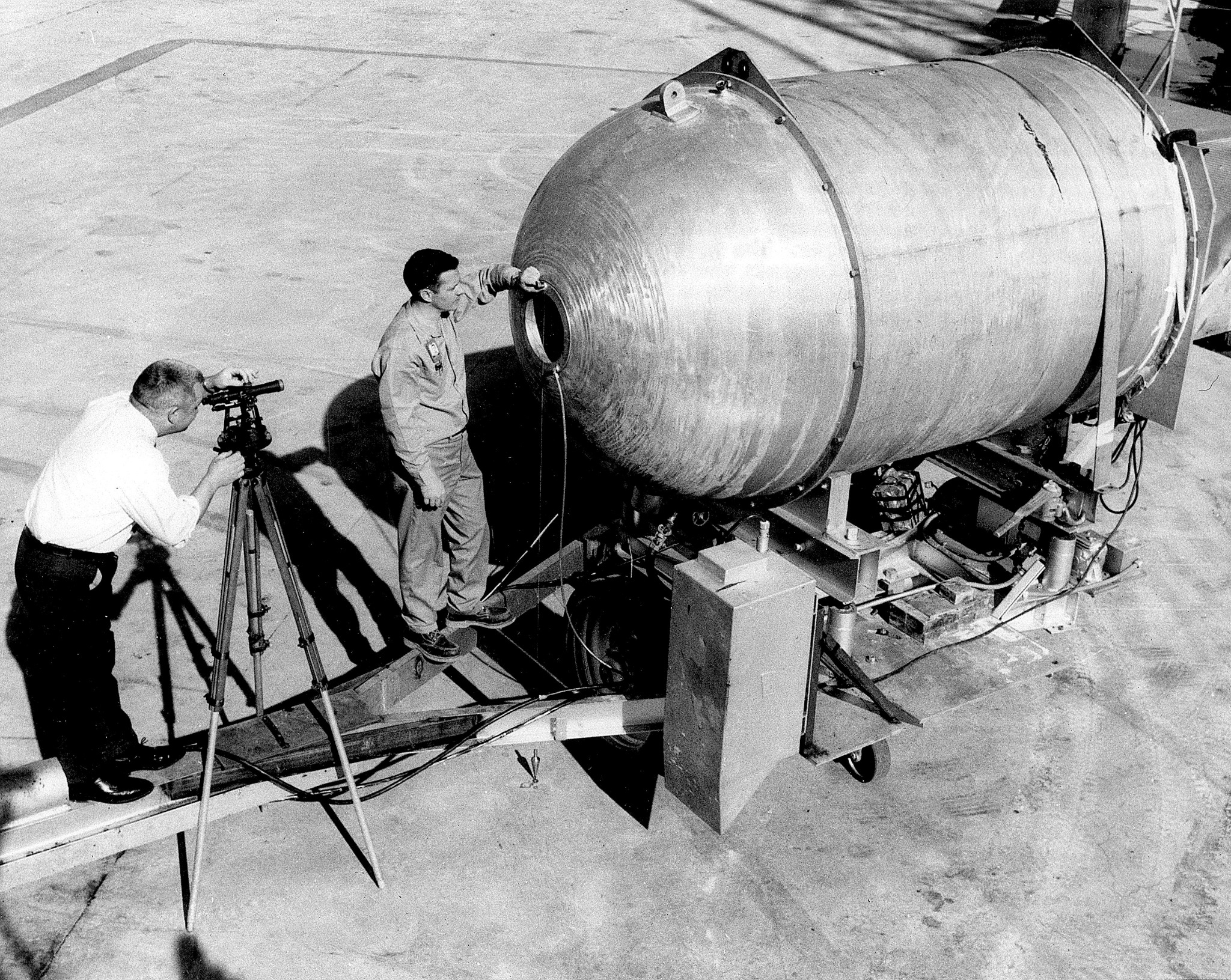
Personnel conducting an experiment measuring fission-neutron transmission through liquid oxygen and nitrogen. U.S. Department of Energy, HD.6B.468. U.S. Department of Energy source
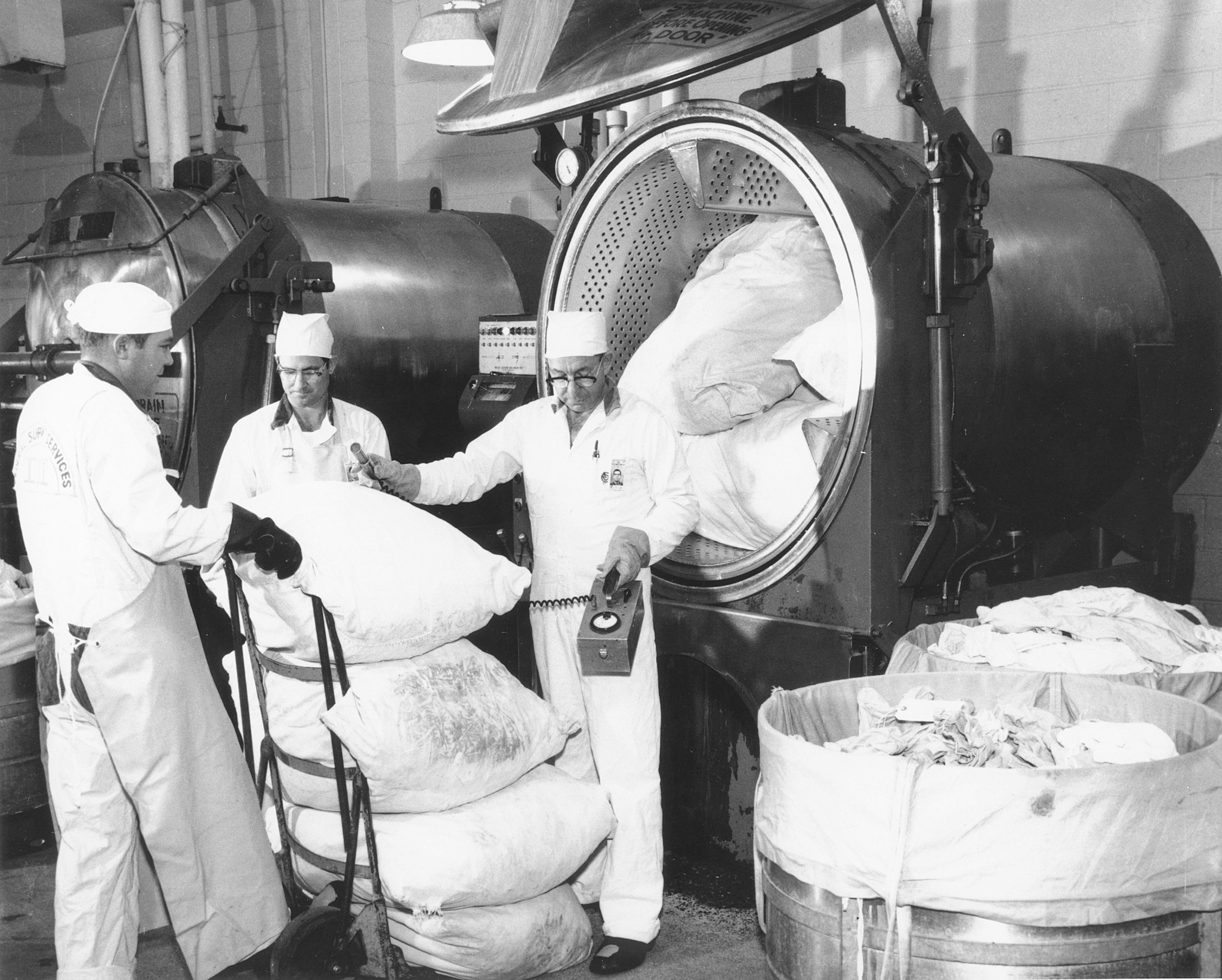
Workers load a 400-pound-capacity washer at the Hanford Project decontamination laundry. U.S. Department of Energy, HD.6C.049. U.S. Department of Energy source
Today, THE ROSETTA WEB™ pauses to honor the men and women whose labor helped build, operate, maintain, and sustain America's nuclear weapons complex.
They were scientists, engineers, technicians, machinists, chemical operators, uranium miners, millers, transport workers, maintenance crews, laboratory personnel, security officers, and countless others whose work often took place far from public view.
Some understood the hazards they faced. Others worked with incomplete information, under conditions of secrecy, or without knowing the full nature of the materials they handled.
Many returned home each evening to their families, never imagining that their work might affect their health decades later.
Some lived long lives. Others suffered disabling illnesses or died prematurely. Still others continue to search for answers about what happened in the places where they worked.
Their stories are part of American history.
Yet much of that history remains scattered among government archives, technical reports, contractor records, personal recollections, and documents that have only recently become accessible.
Some records have been lost. Others remain restricted. Many have never been examined in the context of the workers whose lives they might help explain.
THE ROSETTA WEB™ was established in the belief that this history deserves to be preserved, examined, and made accessible.
Our commitment is not simply to document facilities, radioactive materials, weapons programs, or government decisions. It is also to recover the human history embedded within those records.
Every production log, monitoring report, incident investigation, shipment record, and historical photograph may help illuminate the conditions under which people worked.
And every unanswered question reminds us that the historical record remains incomplete.
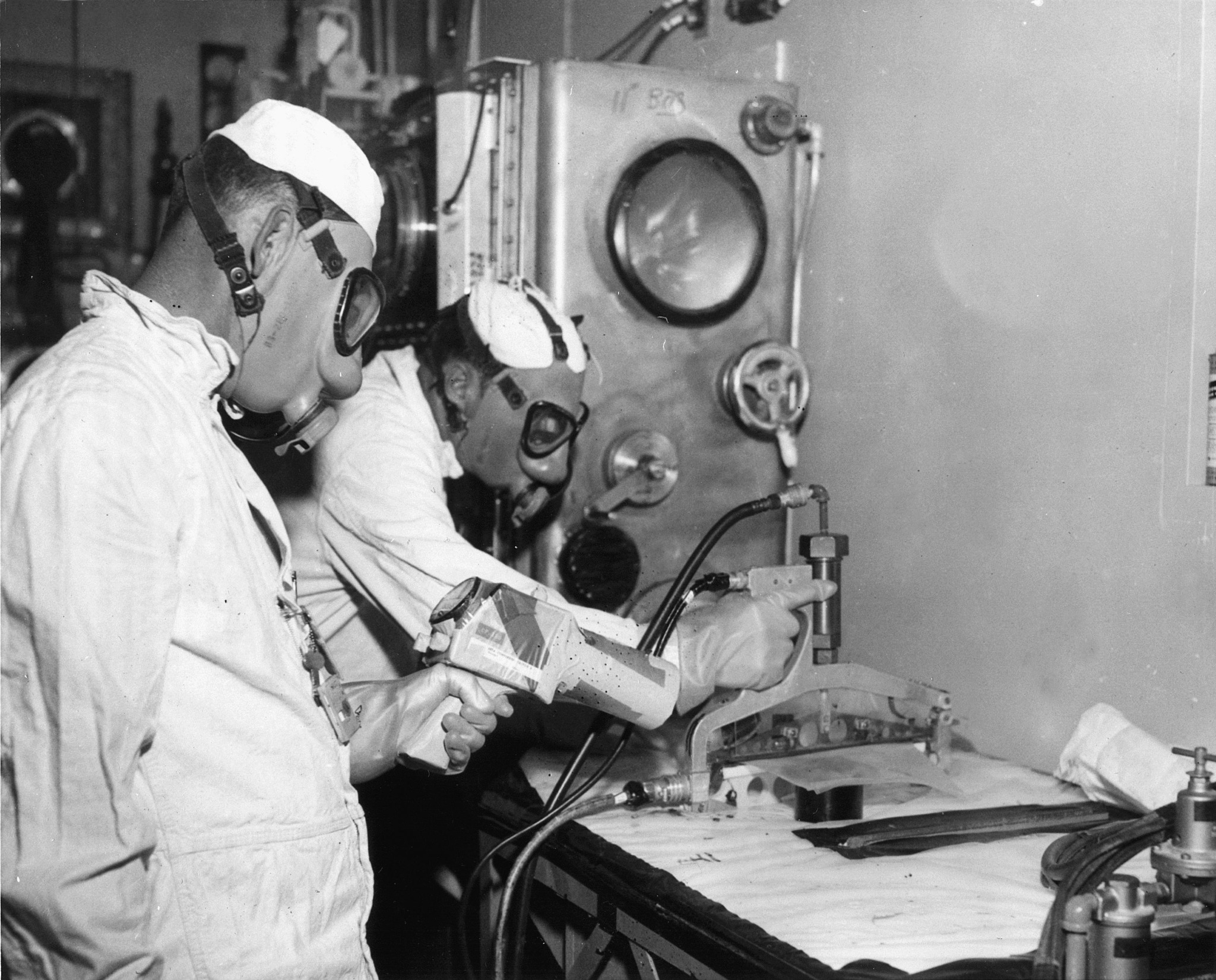
Two workers in respirators and protective clothing at a laboratory work station. Facility not identified in U.S. Department of Energy caption. U.S. Department of Energy, HD.6D.919. U.S. Department of Energy source
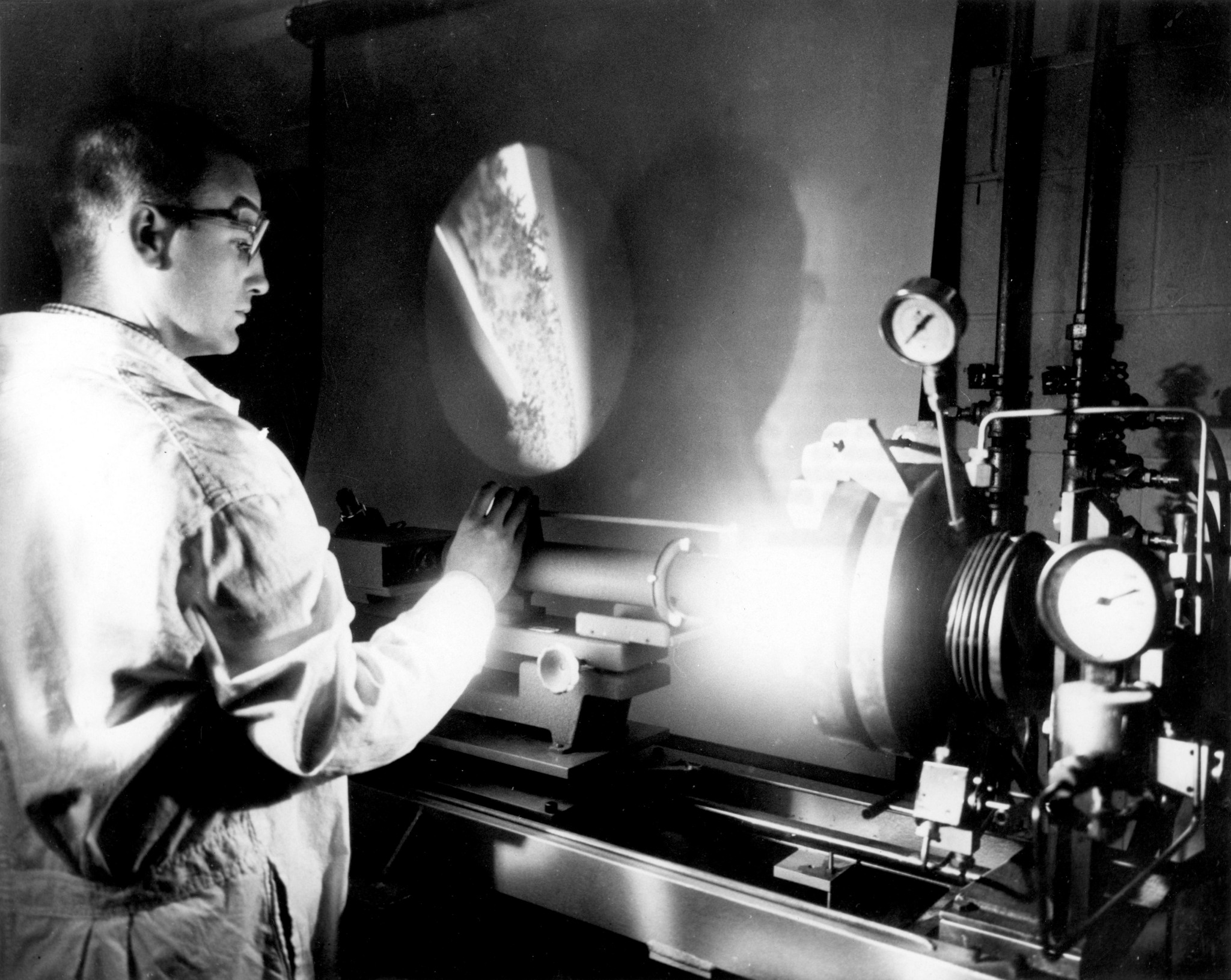
Battelle senior technician Dick Lewis examines ceramics using optical equipment at high temperatures. U.S. Department of Energy, HD.6D.700. U.S. Department of Energy source
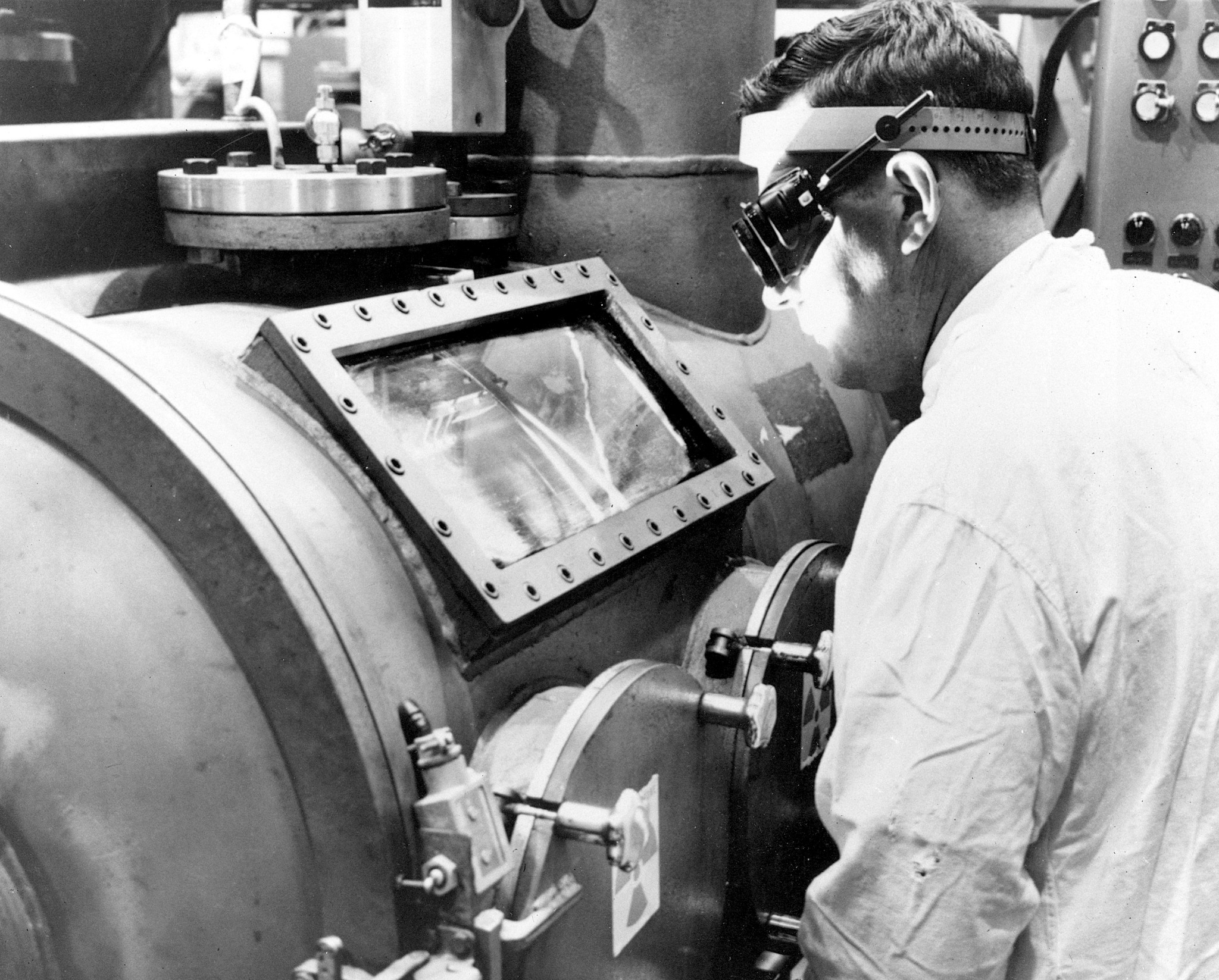
A worker observes electron-beam welding equipment developed for nuclear fuel-element fabrication. U.S. Department of Energy, HD.6D.701. U.S. Department of Energy source
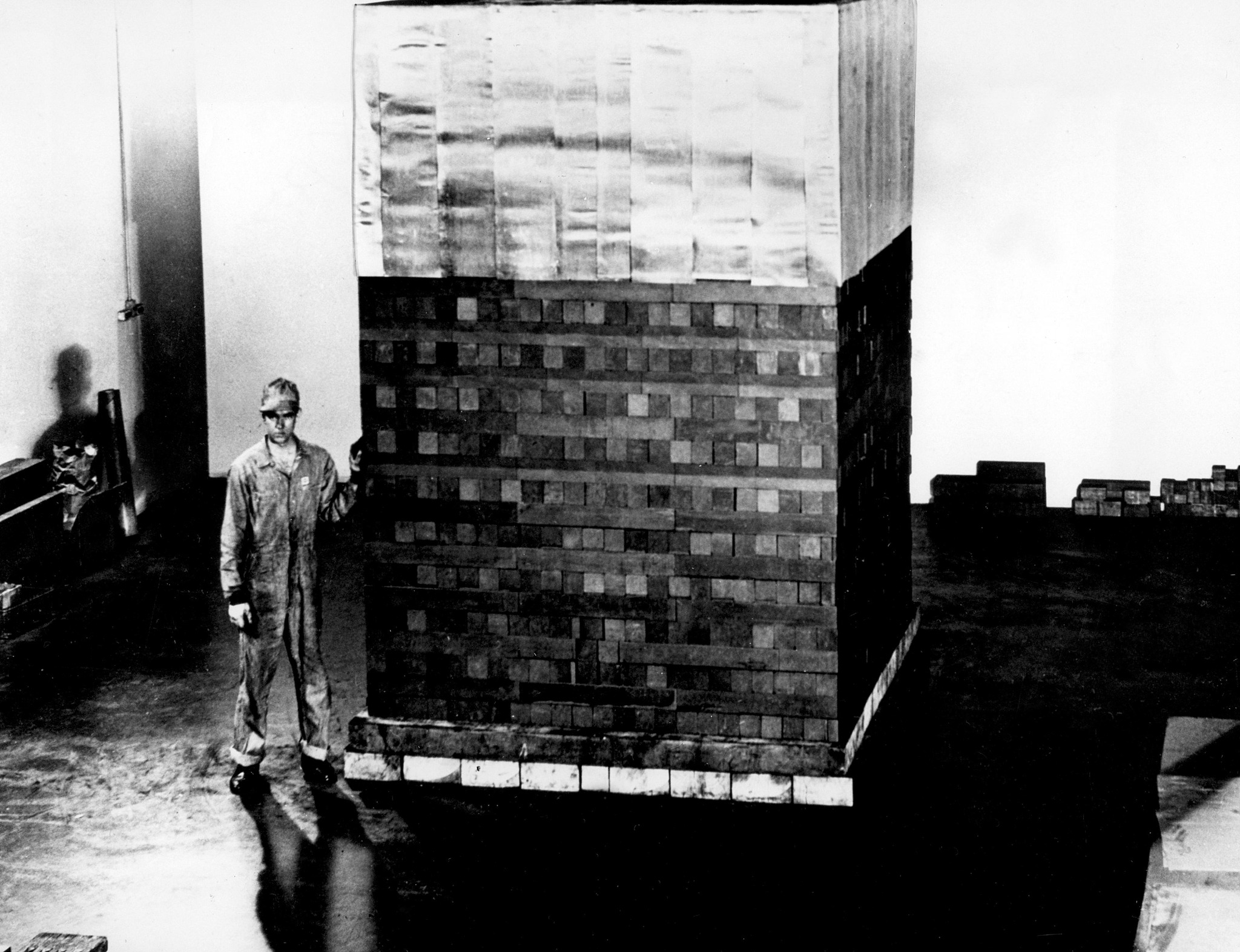
An unidentified worker beside an experimental exponential pile constructed beneath the West Stands of Stagg Field. U.S. Department of Energy, HD.5A.025. U.S. Department of Energy source
Remembrance Requires Accountability
Honoring America's nuclear workers requires more than setting aside a day in their memory. It requires acknowledging the circumstances under which they worked and the responsibilities that remain.
The United States government established, financed, and directed the nuclear weapons enterprise. Through federal agencies, laboratories, contractors, and subcontractors, it oversaw a vast network of facilities whose workers performed essential, frequently hazardous, and sometimes secret work.
The consequences were not always adequately understood, disclosed, monitored, or documented.
In 2000, Congress acknowledged that nuclear weapons workers had been placed at risk without their knowledge or consent, that records revealed unmonitored exposures, and that government practices had created obstacles for workers seeking compensation. Those findings are reflected in the Energy Employees Occupational Illness Compensation Program Act.
Those findings were an extraordinary acknowledgment of institutional responsibility.
But acknowledgment is not the same as accountability.
More than a quarter-century later, workers and their families still confront difficult questions about historical exposures, incomplete monitoring records, missing documentation, and the adequacy of methods used to reconstruct occupational radiation doses.
The federal government cannot reasonably expect workers to produce records that government agencies and their contractors were responsible for creating, preserving, and making accessible.
The absence of an exposure record is not evidence that exposure did not occur.
Nor should uncertainty arising from inadequate historical documentation automatically become a burden borne by the worker.
Accountability requires preserving and releasing historical records, openly examining failures in worker protection and exposure monitoring, acknowledging the limitations of scientific reconstruction, and administering compensation programs with fairness, transparency, and respect for the people they were created to serve.
It also requires recognizing that government responsibility does not end when a facility closes, a contractor changes, a program becomes classified, or a generation of workers passes away.
The nation's nuclear history includes extraordinary scientific accomplishments. It also includes human costs that must not be obscured by those accomplishments.
THE ROSETTA WEB™ is committed to preserving and examining that history, including evidence that challenges official accounts, reveals institutional shortcomings, or raises questions that remain unanswered.
We do not presume that every historical allegation is established fact. We insist that the evidence be preserved, examined, and evaluated honestly.
On this National Day of Remembrance, we ask the federal government to honor nuclear workers not only through words of gratitude, but through continued responsibility for the consequences of the work it directed.
Remembrance without accountability is incomplete.
And for the workers whose lives were changed by their service, accountability delayed can mean accountability never received.
To America's nuclear workers, past and present, and to the families who stand beside them:
We remember. We honor. We will continue searching for the truth.
THE ROSETTA WEB™
Preserving the Evidence. Recovering the History. Honoring the Workers.
Photograph acknowledgments
Historical photographs courtesy of the U.S. Department of Energy historical photograph collections. Each photograph is credited with its archival identifier and a link to its source record. Historical descriptions reflect the source records; inclusion does not establish any individual worker’s exposure history.
Historical references
S. Res. 903, 119th Congress — National Day of Remembrance for Nuclear Workers.
42 U.S.C. § 7384 — Congressional findings concerning nuclear weapons workers.